

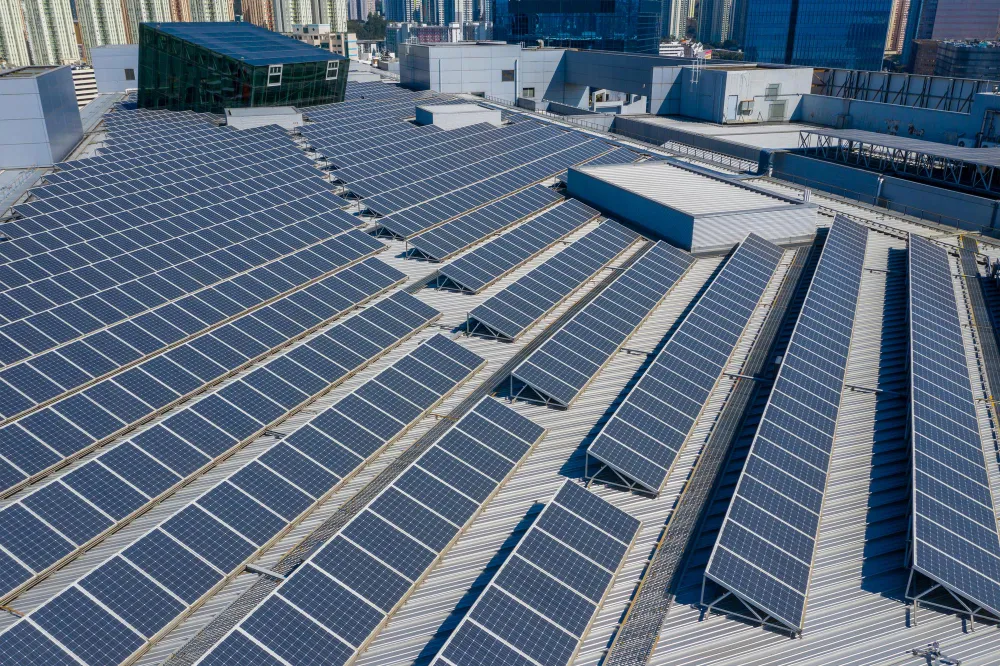
The UK is not exactly famous for sunshine. For many business owners, that is the first reason they rule out solar power altogether. Paying thousands of pounds for panels that sit under grey skies feels like a poor decision. But this thinking is based on outdated information, and it is costing businesses real money every year.
So, how efficient are commercial solar panels? The honest answer to this question is far more positive than most people expect. Modern panels do not need bright sunshine to work. They generate electricity from daylight, not just direct sunlight. Even on a cloudy day, a well-installed system will still produce a useful amount of power for your building.
Solar technology has improved at a remarkable pace over the last ten years. This guide breaks down exactly what efficiency means, what figures you can realistically expect, and how to get the best results from your system.
What Is Meant by Commercial Solar Panel Efficiency?
Efficiency is simply a measure of how much sunlight a panel turns into usable electricity. For example, if 100 units of sunlight land on a panel and it produces 20 units of power, that panel is 20% efficient.
This number matters because it tells you how much roof space your business will need. A small roof means you need panels with a higher rating to meet your energy demands.
The calculation itself is not complicated. Engineers look at a panel’s wattage and compare it to its physical size. A simple way to understand this is:
- The Wattage: Most commercial panels now range from 350W to 520W.
- The Surface Area: A standard large panel is roughly 78 inches by 39 inches.
- The Output: A higher wattage in a smaller frame means better commercial solar panel efficiency.
It is also worth knowing the difference between a full panel and a single cell. A panel is made up of many small squares called cells. The commercial solar cell efficiency is the performance rating of these individual cells. On their own, cells tend to score higher than the full panel.
The slight reduction occurs because, once the cells are integrated into a framed module with glass, wiring, and protective layers, a small amount of energy is lost during conversion and transmission. As a result, the overall panel efficiency rating is usually slightly lower than the individual cell efficiency rating.
How Efficient Are Commercial Solar Panels in the UK?
The technology has come a long way since the early days of renewable energy. Older solar panels were quite weak and could only convert about 6% of the energy from the sun.
Today, modern solar panels are significantly more advanced. Most modern systems installed in UK warehouses and offices have an efficiency range between 15% and 25%.
While 15% might seem small, it makes a massive difference to a business. When you apply that percentage to a large factory roof, it can save you hundreds or even thousands of pounds every year.
When you invest in a solar system, you are purchasing a long-term asset designed to deliver energy for decades. Most manufacturers provide a performance warranty of at least 20 years, giving you clarity about expected output over time.
Solar panels do not suddenly stop working. Instead, their efficiency gradually declines each year, typically by about 0.5% annually. This gradual degradation means:
- Year 1: Your panels start at 100% capacity.
- Year 10: They still produce roughly 95% of their original power.
- Year 25: They will likely still be working at 85% capacity.
The slow degradation is why the return on investment is so strong. Even after two decades, your system will continue to generate plenty of free electricity for your business.
Factors That Affect Commercial Solar Panel Efficiency
Even the best panels can perform poorly if they are not set up correctly. You need to consider the environment around your building and the type of hardware you use. Several key factors determine how much usable electricity is ultimately delivered to your battery storage system or operational equipment.
1. Panel Technology and Module Type
The two main types of solar panel modules are monocrystalline and polycrystalline. Monocrystalline panels are made from a single pure crystal.
They are black and have the highest efficiency levels. Polycrystalline panels are blue and made from many crystals melted together. They are cheaper, but they need more roof space because they are less efficient at catching light.
2. Roof Orientation and Installation Angle
In the UK, roof orientation plays a critical role in overall solar panel performance. For optimal energy generation in the UK, solar panels should ideally face south to maximise exposure to sunlight throughout the day. This angle allows them to catch the sun from morning until evening.
The best angle for a UK roof is usually around 35-40 degrees. If your roof is flat or faces east, you can still get good results, but the efficiency might drop by 10% or 15%.
3. Temperature and Weather Conditions
A strange fact about solar is that panels hate getting too hot. They work best at 25°C. If the temperature goes much higher, the cells become less efficient at moving electrons.
Because solar panels lose efficiency at higher temperatures, the UK’s cooler and moderate climate actually supports consistent performance. Our cool breezes and moderate climate keep the panels at a steady temperature, which prevents them from losing power due to heat.
4. System Design and Inverter Quality
Solar panels generate electricity in DC (Direct Current), while most building systems, including computers and lighting, operate on AC (Alternating Current). An inverter converts DC power into usable AC power. If the inverter is of low quality, some energy can be lost during this conversion process, similar to water leaking from a pipe. Using high-quality wiring and smart inverters ensures you keep as much energy as possible.
How to Maximise the Efficiency of Commercial Solar Panels
Once your system is installed, you want to keep it running at its peak. Knowing how efficient commercial solar panels are is only half the battle. You also need to manage the site to ensure nothing gets in the way of the light.
1. Conduct a Professional Site Assessment
A professional installer will look for things that block the sun, including::
- Tall trees
- Chimneys
- Nearby buildings
They use special tools to see where shadows will fall in December versus June. They will also check your roof structure. Since commercial panels are large (about 6.5 feet long), the roof must be strong enough to hold them during high winds.
2. Use High-Efficiency Commercial Solar Cells
If you have limited roof space, you should pay more for better cells. If you use a high commercial solar cell efficiency, it means you can get more power from fewer panels.
Using fewer high-efficiency panels reduces the overall system weight on your roof and lowers the cost of the mounting and racking structure required to support them. It is often cheaper in the long run to buy better tech up front.
3. Schedule Ongoing Monitoring and Maintenance
A solar system needs regular attention to stay at its best. Dirt, bird mess, and dust can build up on the surface over time and block sunlight from reaching the cells. Even a thin layer of grime can reduce your output by 5% or more.
- Cleaning: A quick wash once a year is usually enough.
- Monitoring: Use an app to track your daily production.
- Inspection: Check the wires every few years to make sure no pests have chewed through them.
Conclusion
Commercial solar is no longer a risky experiment. It is a proven way for UK firms to save money. Even with our clouds, the 15% to 25% efficiency of modern panels provides a huge amount of energy. When you consider that these panels last for 25 years and only lose 0.5% power annually, the financial benefits are clear.
By picking the right panels and keeping them clean, you can protect your business from high energy costs. It is a simple and effective way to make your company more sustainable while keeping your bank balance healthy.
If you are ready to find out how much your business could save, Ablaze Green Energy offers tailored system design and clear guidance on energy savings from start to finish. Get in touch today and take the first step towards lower energy bills.