
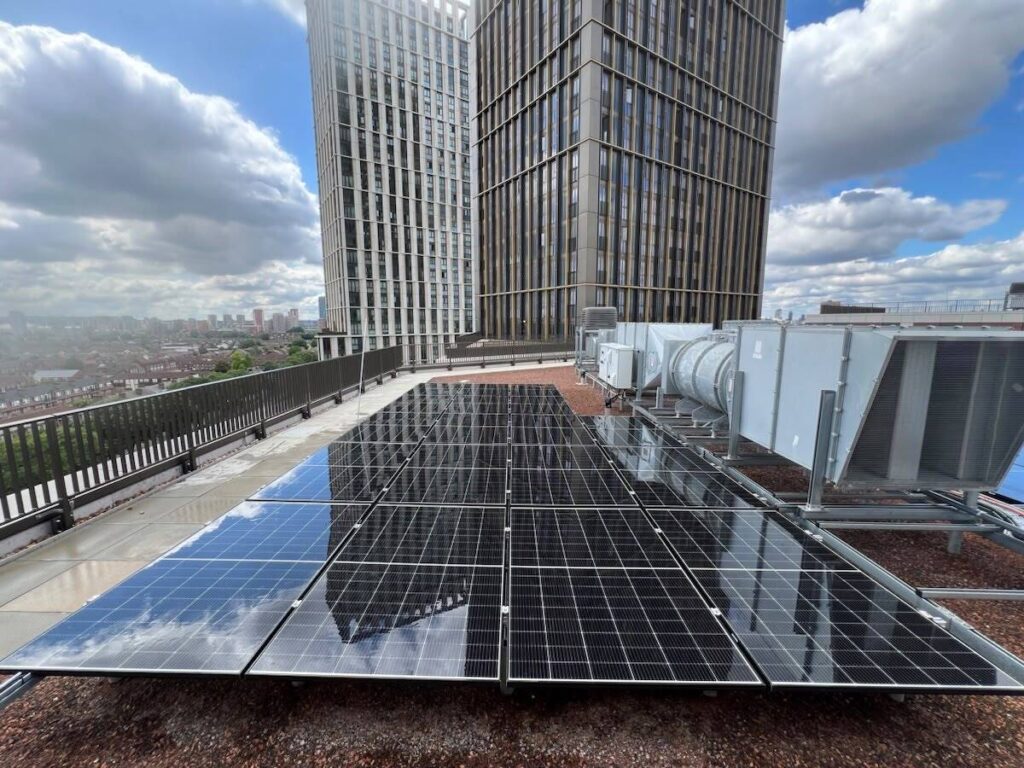
For commercial property owners and facilities managers, making better use of available roof space is becoming increasingly important. With businesses facing continued pressure to reduce energy costs, improve sustainability and lower carbon emissions, solar photovoltaic (PV) systems can provide a practical way to generate renewable electricity on-site.
However, commercial buildings with high-rise structures or green roof systems require a more considered approach. These installations involve additional structural, access, maintenance and design considerations that need to be addressed before work begins.
Ablaze Green Energy Solutions are one of the most experienced in this field and have helped multiple architects, design consultants and Main contractors with the design from concept to construction and the installation of very complex roofs.
Solar PV for Commercial High-Rise Buildings
High-rise commercial buildings can have significant electricity demands from lighting, heating, cooling, ventilation, IT equipment and other building services. Solar PV can help offset some of this electricity consumption by generating renewable power directly on-site.
For businesses, one of the key advantages of commercial solar PV is the potential to generate electricity during normal operating hours, when many commercial buildings have their highest energy demand.
However, roof space can be limited, particularly on taller buildings. This makes effective system design essential. Panel positioning, orientation, shading and available roof area should all be assessed to ensure the system provides the best possible return from the available space.
High-rise buildings can also experience greater wind exposure, making structural assessment and appropriate mounting systems particularly important.
Commercial Solar PV and Green Roofs
Green roofs are becoming more common across commercial developments, particularly where businesses are looking to improve the environmental credentials of their buildings.
Combining a green roof with solar PV can provide an effective approach to making commercial roof space work harder. However, the two systems need to be carefully coordinated.
Solar panels can change the amount of sunlight and rainfall reaching the vegetation below, while growing plants and vegetation can potentially cause shading or restrict access to the PV system if not properly managed.
A well-designed installation should consider:
- The existing green roof construction and growing medium.
- The positioning and spacing of solar panels.
- Potential shading from surrounding buildings and structures.
- Vegetation management around the PV installation.
- Safe access for maintenance and inspections.
- Drainage and rainwater management.
- Protection of the existing roof membrane.
- Structural loading and wind uplift.
- Cable routes, inverters and electrical equipment.
- Future maintenance requirements.
Protecting the Commercial Roof
One of the most important considerations when installing solar PV on a commercial property is protecting the existing roof.
Commercial roofs can incorporate waterproofing systems, insulation, drainage and other building services, all of which need to be considered during the PV design.
Where fixing systems are required, these should be carefully assessed to ensure the integrity of the roof is not compromised. In some circumstances, suitable non- penetrative mounting solutions may be considered, depending on the roof construction and structural requirements.
For green roofs, additional care is required to ensure installation and maintenance activities do not damage the vegetation, growing medium or waterproofing layers.
Structural Assessment and Wind Loading
The structural requirements of a high-rise commercial building should never be overlooked.
Solar panels and their mounting systems add additional load to the roof, while taller buildings can be subject to increased wind forces. A structural assessment can help establish whether the existing roof can accommodate the proposed PV system and determine the most appropriate mounting arrangement.
This is particularly important for commercial buildings where the roof may already support plant, air-conditioning equipment, ventilation systems or other infrastructure.
Planning for Maintenance
A commercial solar PV system is a long-term investment, so maintenance should be considered from the beginning.
Panels, inverters, electrical equipment and mounting systems need to remain accessible for inspection and maintenance. On green roofs, vegetation may also require ongoing management to prevent it from shading panels or obstructing access routes.
Designing appropriate walkways and maintenance areas can help protect both the PV system and the green roof while making future servicing safer and more efficient.
Making Better Use of Commercial Roof Space
For commercial property owners and facilities managers, the combination of solar PV and green roof systems can provide an opportunity to deliver multiple environmental benefits from the same roof area.
Solar PV can generate renewable electricity and help reduce reliance on grid electricity, while green roofs can contribute to biodiversity and sustainable rainwater management.
The most effective solution will depend on the individual building, its energy requirements, roof construction and existing infrastructure.
Is Your Commercial Roof Suitable for Solar PV?
Whether you operate an office building, retail premises, industrial facility, warehouse or other commercial property, a professional assessment can help determine whether solar PV is suitable for your roof.
For high-rise commercial buildings and properties with green roofs, careful planning is essential. By considering structural capacity, wind loading, roof protection, panel positioning, vegetation management, access and maintenance, businesses can develop a solar PV system that works effectively alongside the existing roof system.
With the right design and installation approach, commercial buildings can turn underused roof space into a valuable source of renewable energy while supporting wider sustainability objectives.